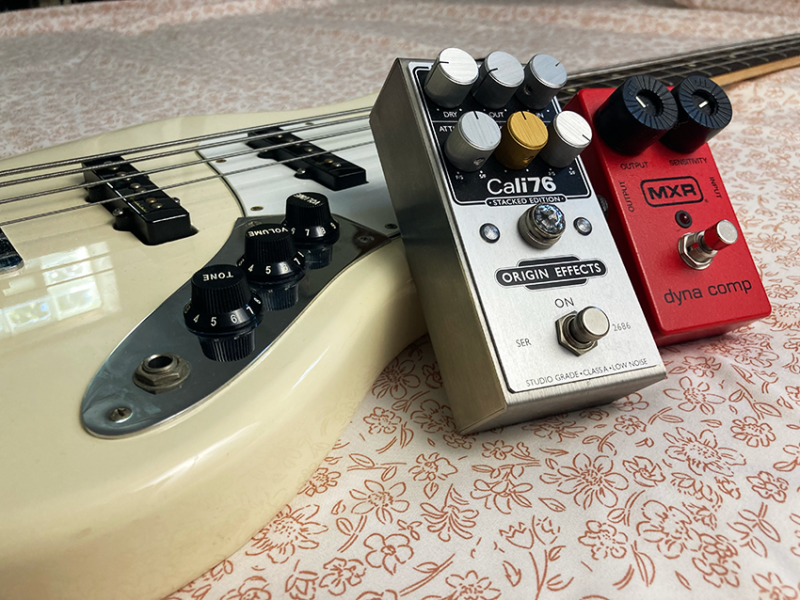
What is compression? Why do we need it? Those are questions asked by nearly every musician at one time or another. It’s a process that is seen as a necessary evil or even a fully-blown mystery until one understands what exactly is going on.
Compression isn’t magic, and it’s not punishment for an unwieldy bass part, it’s simply a tool or utility that makes your bass signal usable within the context of a mix. That could be in a studio session or on-stage with three other musicians competing for space through the front of house. The most important thing to remember is, bass compression isn’t only about control, it’s about feel.

Sitting Still and the Edge of a Note
The first job of compression is consistency above all. When a bass part is played with human hands there’s going to be variation in the tone and attack of each note. One way to think of compression used properly is it helping you be a more disciplined player. While natural variation is pivotal in providing feel to the performance, too much variation can muddy a mix, or make the low-end drop out if you’re not careful. Where one note sticks out and another disappears, the mix overall feels less confident than it should.
Compression helps smooth everything out, without changing the performance or rewriting any parts. It just keeps the levels in check so the part itself sounds like one solid idea. A great example of in-your-face compression comes from the MXR Dyna Comp pedal. A completely un-subtle version of the effect, the Dyna Comp is a valuable tool to know what exactly happens when you engage a compressor on your pedalboard. You’ll hear the signal tighten right away — suddenly your bass part feels alive in ways it didn’t before. And when you really start to dig into the strings, you’ll notice it also has a “reined in” texture that wasn’t there before.

Compression also affects the notes themselves. If the attack is slower, more of your initial hit of a note gets through, so the note will feel more open and percussive. But if the attack is faster, the compressor grabs on sooner, so the note in turn feels rounder, smoother, and more controlled.
Related: Compressor Pedals and You
VCA, FET, optical…there are several types of compressor pedals circuits out there…which is right for you? Read »

Moving from the Dyna Comp to a more feature-heavy compressor like the Origin Effects Cali76, which is based on the legendary Universal Audio 1176 limiter, you’ll notice the ability to sculpt your notes in a more finite way. The Stacked Edition Cali76 offers two 1176-style FET compressor stages in series, with separate attack and release controls, plus a dry blend. This makes it easy to shape the note instead of just flattening it. You can let some attack through, clamp the body of the note, and keep enough natural movement in the part so it feels played and not processed. It’s really the tale of two compressors, bold and squashed, or refined and feature-rich.
Sustain, Size, and the Low-End Glue Around It
Once you’ve started to control the front end of the note you’ll start noticing the back end too. Compression can stretch sustain, making your bass lines feel more connected, and smoother. Notes hang in the mix for a longer period, making things like slides to other notes feel more deliberate. This in turn can make the perceived size of your signal bigger too, even when your part isn’t actually any louder. The quieter parts come up in the mix, the loud spikes are flattened, the whole performance feels denser and connected to the mix, or glued in.
Related: MXR Dyna Comp: Get the Most From Your Compressor Pedal
Known for twangy, punchy cleans, can the MXR Dyna Comp do more? Myles puts his to the test to find out. Read »

This is probably the biggest reason bassists and producers reach for a compressor first: glue. Bass and drums need to act like one system in a professional mix. It’s so easy for these two instruments to feel disconnected, rendering your mix unprofessional and disjointed sounding. Compression can instantly help the pocket of your track or live performance lock-in because it connects those pivotal rhythm section pieces. Gentle leveling, more control, and tightening a loose signal all feed into a more connected bottom-end of the mix. That’s why it’s called glue, because it’s holding the mix together, locking in the rhythm section can bring even the most archaic track into the land of professional mixes.

Compression on bass isn’t about fixing a leveling problem, it isn’t even about taming your signal (at least not the way most people think about it). It’s about serving the performance and song the best way you can, by shaping notes, lending sustain to a dry signal, affecting perceived size, and gluing a rhythm section together making for a more professional-sounding track overall.
No matter what serves the song the best — an intricate note shaping compression or a straightforward, in-your-face sustain boost — the goal is the same: make it solid, and make it sit.