
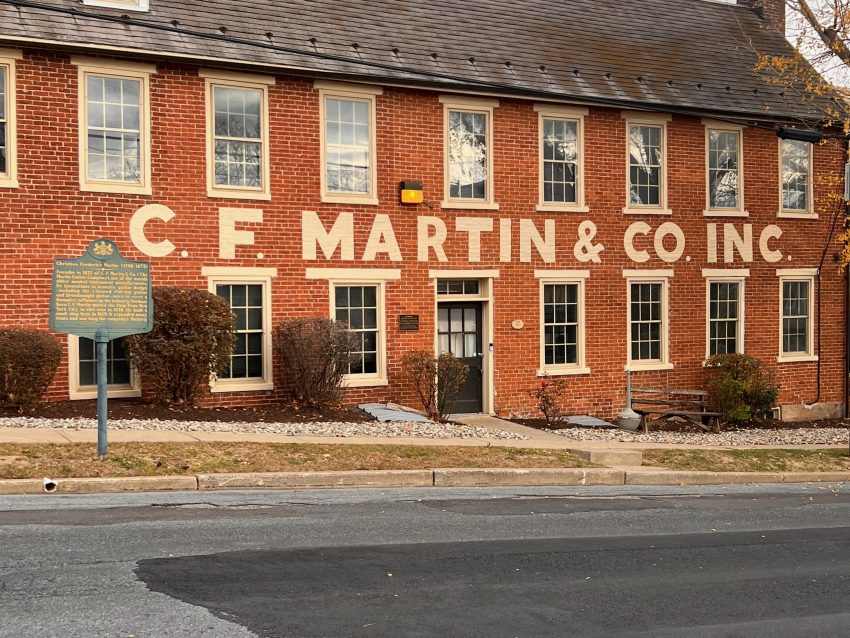
In November of 2025, the zZounds crew traveled to Nazareth, PA, to embark on an exciting journey through Martin’s world-renowned factory and museum. During our factory tour, we witnessed Martin’s time-tested processes, which incorporate remarkable manual craftsmanship complemented by a small handful of pre-programmed machines. The museum, which sits mere feet from the entrance to the factory, impeccably preserves Martin’s history, which only served to deepen our appreciation of their impact on the guitar world. So, come take a dive with us as we recount our exciting experience at Martin HQ!
The North Street Factory

In the mid-1800s, founder Christian Frederick Martin erected the company’s first factory on North Street in Nazareth, PA. This building, whose size and structure are comparable to that of a mid-sized family home, is widely considered to be the birthplace of the modern-day acoustic guitar. As an acoustic guitar fan, walking through the rooms where some of the earliest Martin guitars were built was nothing short of awe-inspiring. The preservation of tools, workstations, and even scribbled notes on the walls from workers further added to the immersion. As Martin’s popularity grew, so too did the demand for their product, and eventually the scope of their ambitions would stretch beyond the walls of the North Street factory. By the mid-1960s, the time had come for Martin to move to a bigger space.
Time-Tested Hand Craftsmanship
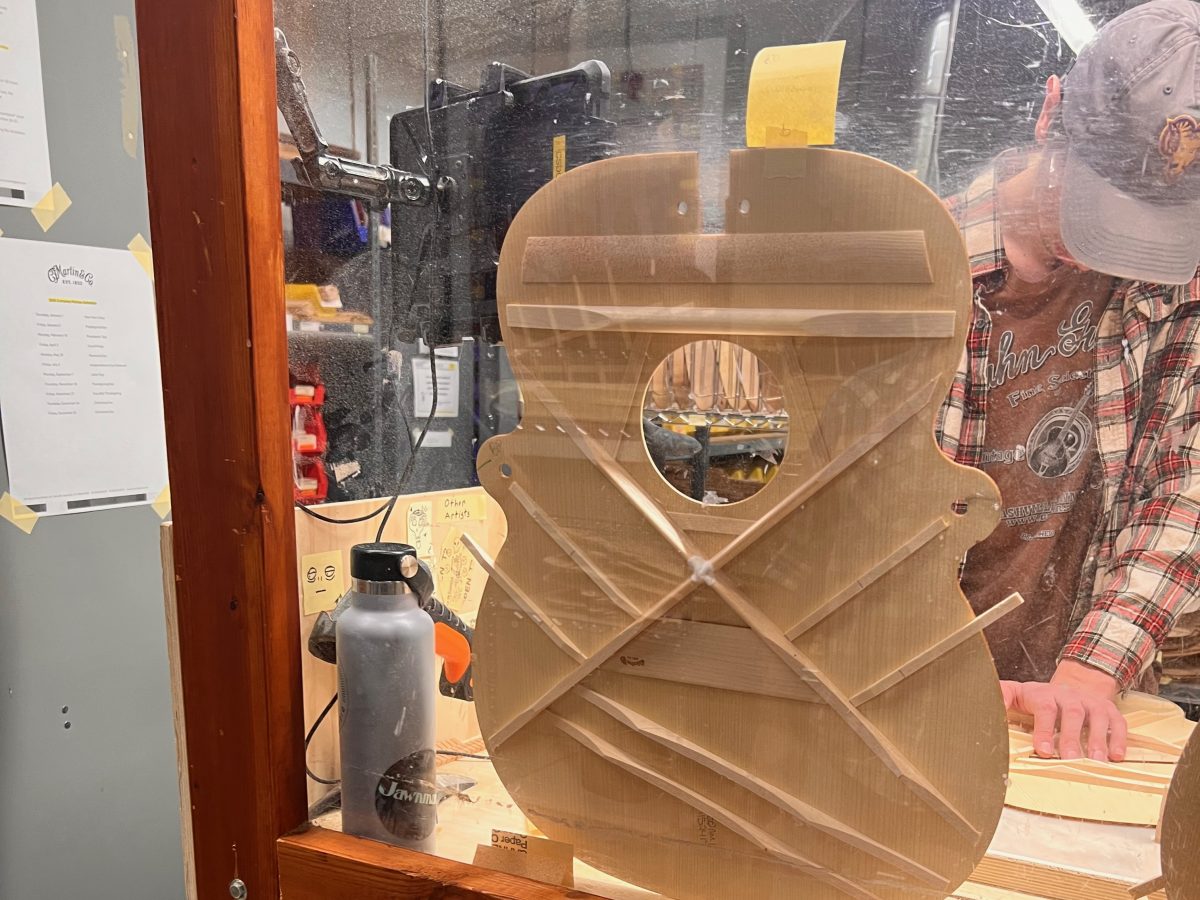
In 1964, Martin moved its manufacturing operations to Sycamore Street, just a short distance away from the original North Street factory. Today, the factory outputs 180 of its USA acoustics per day, due in large part to the world-class craftsmanship of its skilled builders. Interestingly enough, most of that work is done by hand through a combination of Martin’s time-tested build processes and a series of modern techniques that have been honed for generations.
This is done to preserve the tradition of Martin’s original building process while also ensuring every acoustic that leaves the factory lives up to the high quality bar that the company has not only set for itself, but for the industry at large. As we walked through the factory, we got to watch as the builders added fretting, rosettes, and special custom shop ornamentation by hand, which was a surreal experience to witness both as a fan and a player.
Machine Work: Maintaining Precision
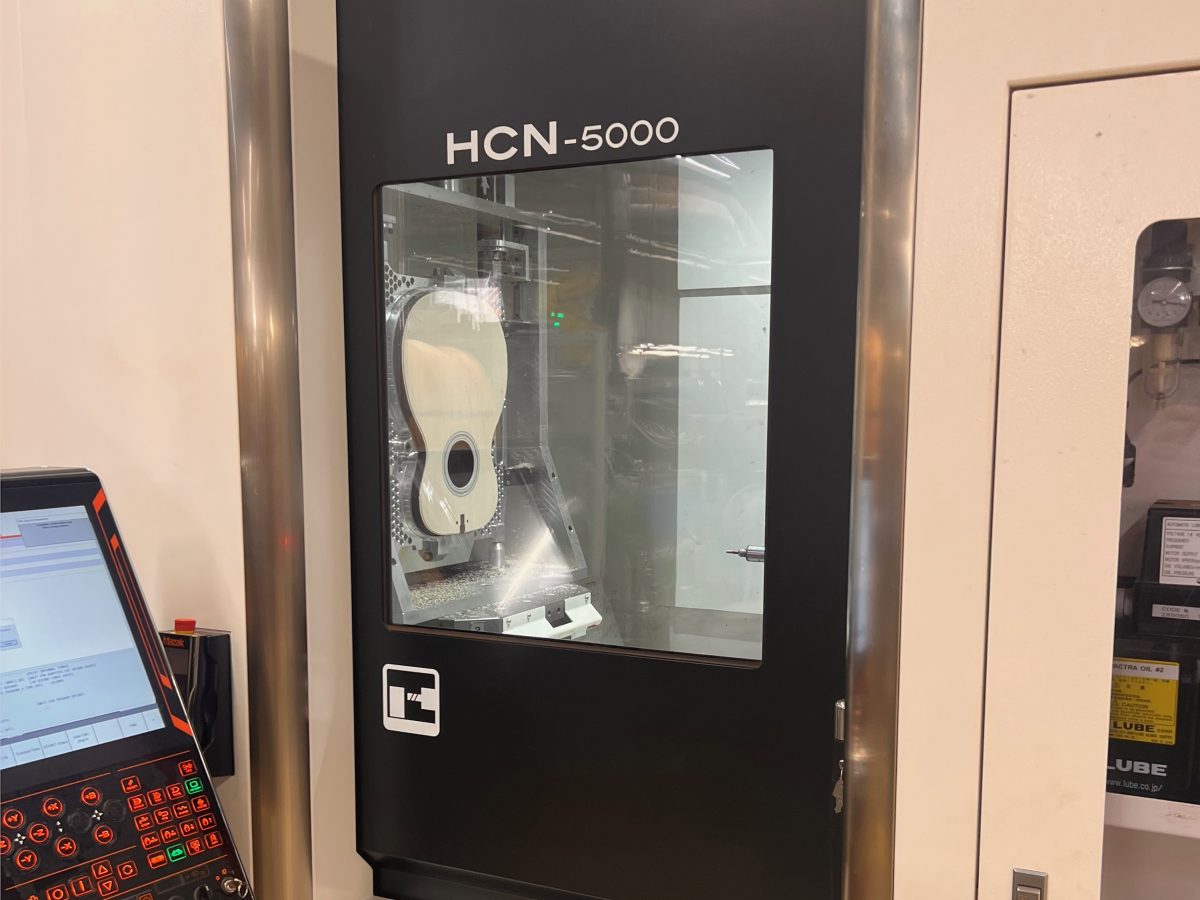
While most of the build process is done by hand, some tasks are handled by machines that are pre-programmed by highly-skilled technicians. For example, certain parts of the body carving process are handled by machines to ensure that each guitar is shaped to its designated model with superb consistency and precision. This automated work isn’t intended to replace the skilled craftsmanship of the builders; rather, it’s designed to ensure that the nuances of each model are captured for the players who will eventually play them.
A Commitment to Quality
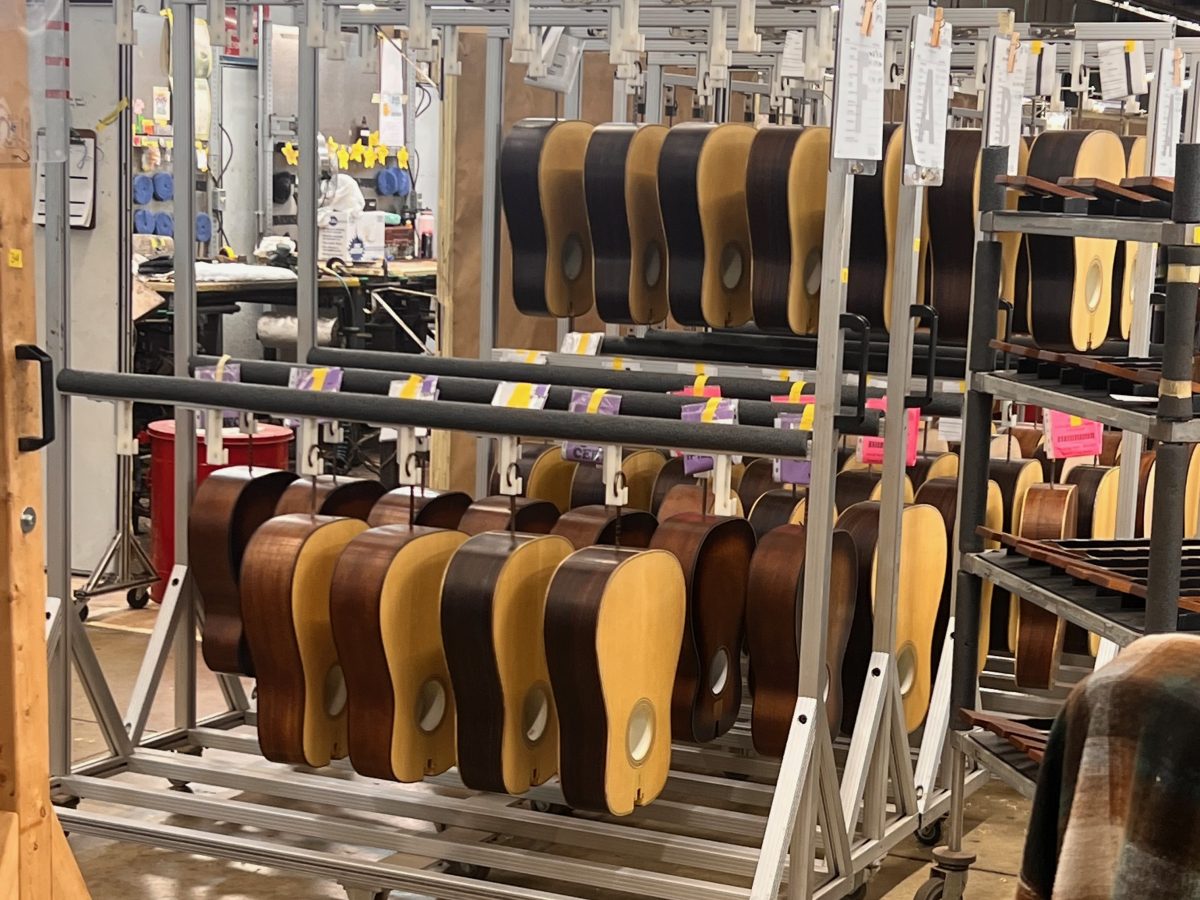
Throughout the tour, we witnessed several building processes specifically dedicated to ensuring every Martin guitar delivers a stable, reliable, and inspiring playing performance. Book-matched tone woods are a key part of that formula, as they ensure that the top and back of any given guitar all come from the same log. We also watched as skilled workers carefully assembled dovetail neck joints by joining book-matched necks and bodies with ultra-strong glue, which plays a key role in shaping the guitar’s resonance and tonal delivery.
As we crossed the finish line of our tour experience, we stopped by the setup stations, where a handful of skilled techs were carefully setting up newly finished acoustics. Interestingly enough, the initial setup isn’t the end of the process, as techs will return to that same guitar four days later to re-check the setup job and make any necessary adjustments. Seeing and learning about this firsthand made it clear that patience in the build process, even as a guitar reaches the finish line, is the key to ensuring it embodies Martin’s rich legacy of top-shelf performance.
Museum Tour: A Stunning Preservation of History
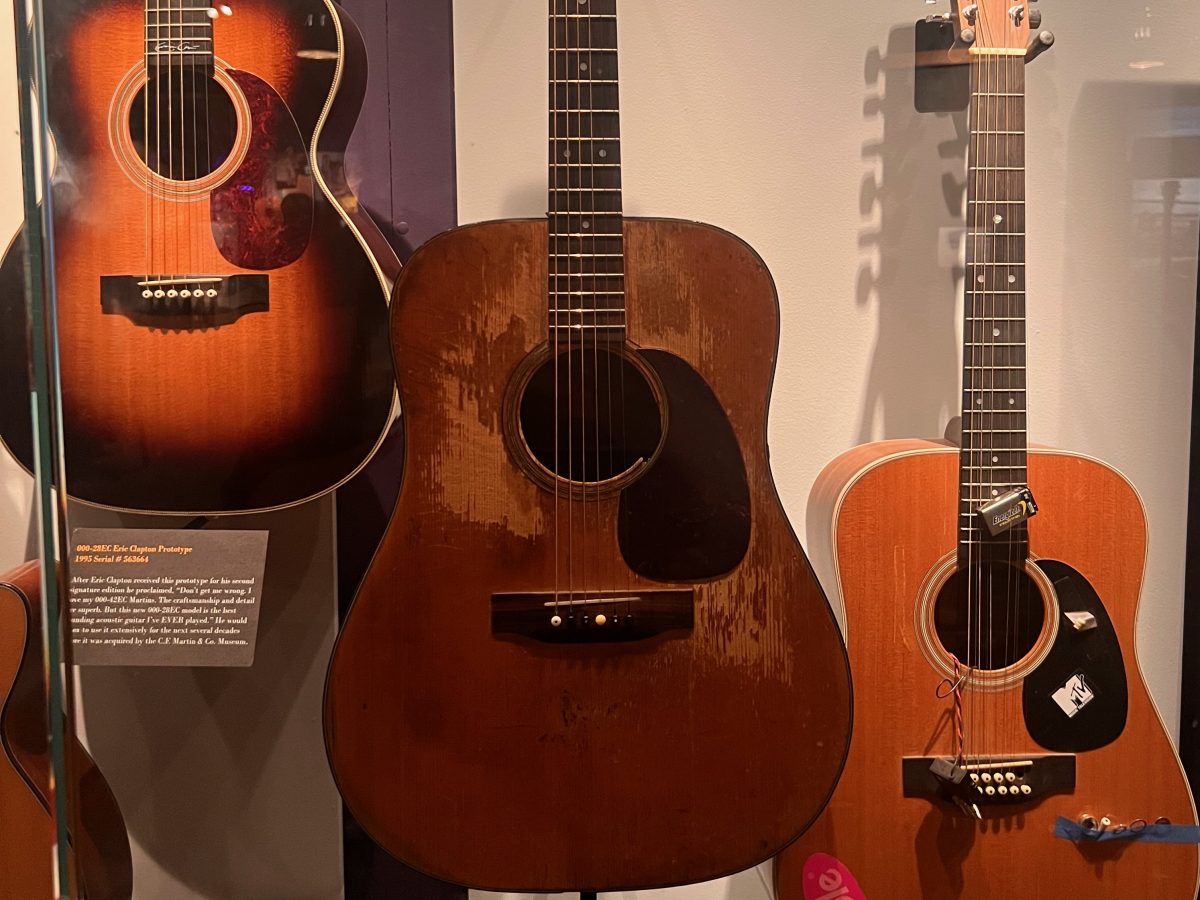
After we wrapped up our factory tour, we walked across the main lobby to the Martin museum to get an in-depth lesson on the company’s history. This turned out to be more than just an ordinary history lesson, however. As we walked through the halls of the museum, which can best be described as an incredible time capsule, we found ourselves surrounded by a massive collection of impeccably preserved instruments from throughout Martin’s history.
In one display case, you’d see the first-string instruments C.F. Martin ever built — perfectly preserved, appearing almost as if they had just come off the line at the factory. In another case, you’d find Kurt Cobain’s D-18, dubbed the “Grandfather”, kept in perfect enough condition for us to be able to play, and yes, of course, we played it! Other pieces included experimental guitars, acoustics signed by pop stars and celebrities from generations ago, and detailed accounts from important figures in Martin’s history. Walking through the Martin museum was a surreal experience for me as an acoustic guitar fan, and one we’ll surely never forget.
Wrap-Up
From walking the floor of Martin’s world-renowned factory to being immersed in their rich history in the museum, there’s a certain excitement in the air at Martin HQ. An excitement for the company’s ongoing legacy, an excitement for the incredible instruments being built here, and perhaps most importantly, an excitement for the future of the acoustic guitar. We certainly felt it every step of the way, and if you ever have the chance to visit, you’ll no doubt feel it too. Thank you to our partners at Martin for arranging this visit for us and for curating an unforgettable experience!



Leave a Reply