
A lot of the tones guitarists still chase came out of boxes that were never built with a pedalboard in mind. The original Foxx Tone Machine came wrapped in flocked fabric, and the Boss CE-1 Chorus Ensemble that shaped clean guitar in the late 70s took up more of the stage than most players can spare today. Footprint aside, the circuits inside these boxes are the reason people still care, and Warm Audio has built its pedal line around recreating those circuits part for part.
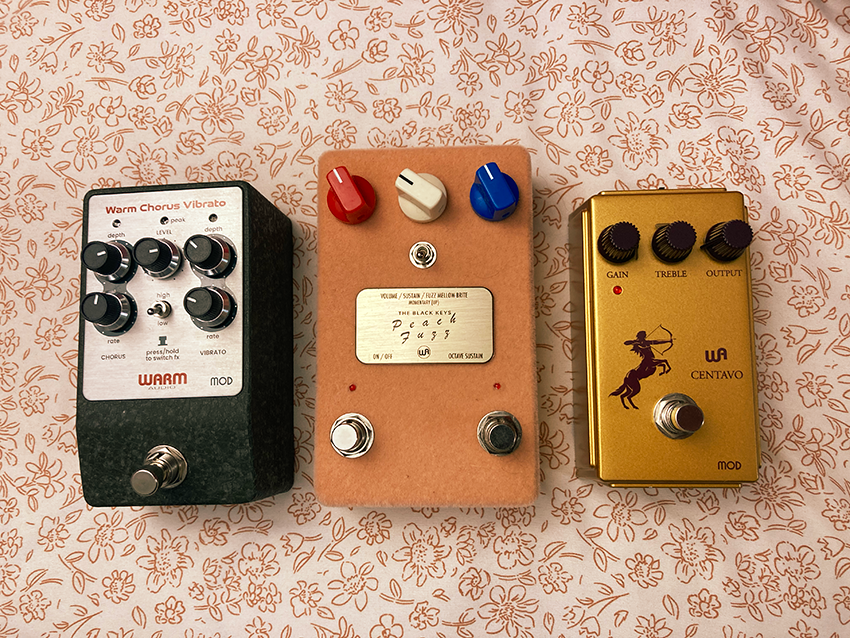
The Black Keys Peach Fuzz, the WA-CV Centavo Mod and the WA-C1 Mod all follow that approach in a smaller footprint. Today, in-studio we’re putting these old pedals in modern form-factors to the test and pulling out some classic tones. All three pedals keep the circuit that made the original worth copying, then add a few controls players always wished they had.
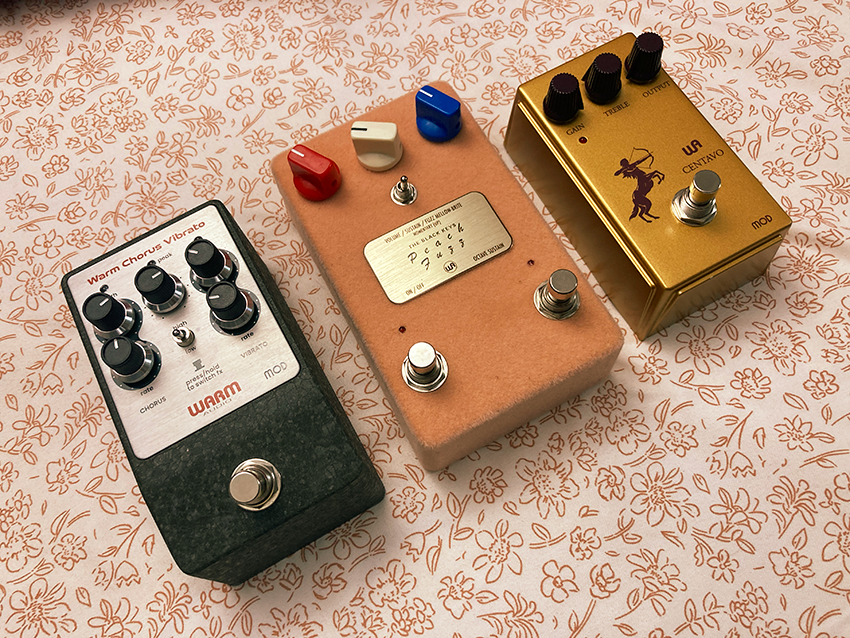
The sound demos for each were recorded with a Les Paul or a Telecaster into a Marshall JTM45 set either right where it starts to break up or more subtle on the cleaner tracks. An amp at that point reacts to every change in pick attack and volume knob, so it shows pretty quickly what a fuzz or overdrive is adding and what it’s taking away.
The Black Keys Peach Fuzz: An Octave on Demand
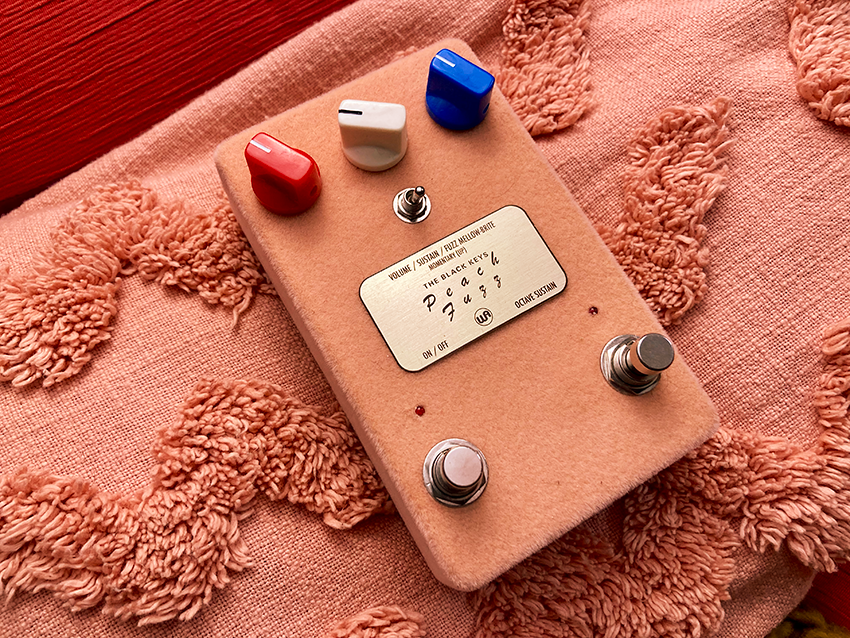
The Peach Fuzz started as Warm Audio’s take on the Foxx Tone Machine, a 70s octave fuzz circuit, then went through a round of tuning with Dan Auerbach of The Black Keys. The peach velvet is a nod to the band’s 2026 album, Peaches! Under the fabric are NOS Fairchild 2N3565 transistors and germanium 1N34A diodes, chosen to get the circuit as close to the original as possible.
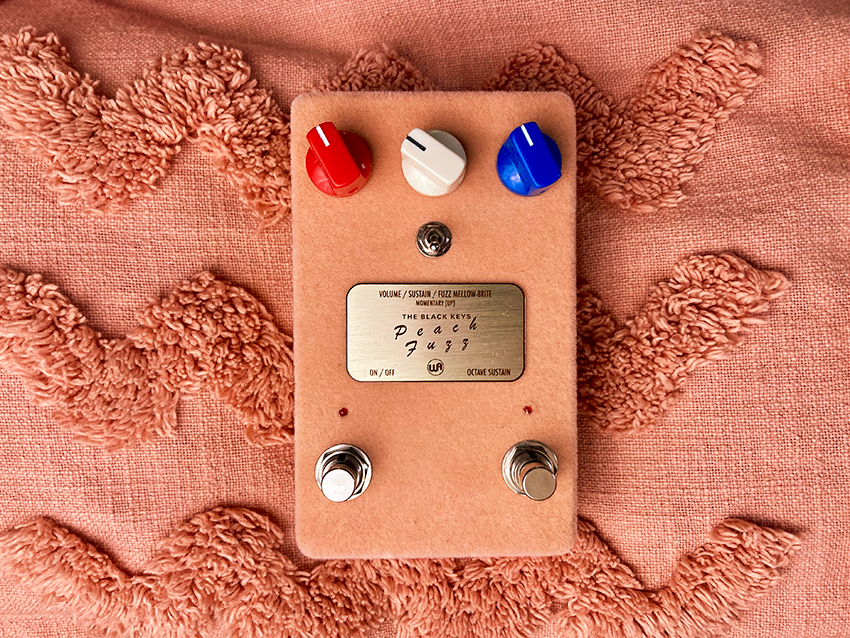
The controls stay close to the vintage layout. Sustain and Volume handle the fuzz and output levels, and the Mellow/Brite control moves the voice from dark and round to something with more bite up top. Low sustain settings give a thick, grainy crunch that sits well on an amp that’s already breaking up, while higher settings open into the heavy, woolly fuzz you hear all over ’70s rock records. It’s what we’re all really chasing.
As a starting point, Brite helps humbuckers keep their note definition, and Mellow takes some of the ice pick out of my Telecaster bridge pickup.
The biggest change is the octave-up, which Warm Audio reworked with Auerbach so it can run latching or momentary. Leave it on for a whole solo, or hold it for one bend and let go before the next verse. Like most octave fuzzes, the effect is clearest on single notes above the 12th fret with the neck pickup. Chords get gnarly and a little ring-mod sounding once the octave is in, which some players will avoid and others will go looking for.
WA-CV Centavo Mod: Pushing the Amp You Already Have
The Centavo Mod is the more pedalboard-friendly version of the Centavo, Warm Audio’s recreation of the Klon Centaur overdrive that players have been chasing since the ’90s. According to Warm Audio, the circuit and components inside are the same as the full-size pedal, TL072 op amps included. What changes is the outside: a smaller enclosure with top-mounted jacks, plus a MOD switch on the back panel.
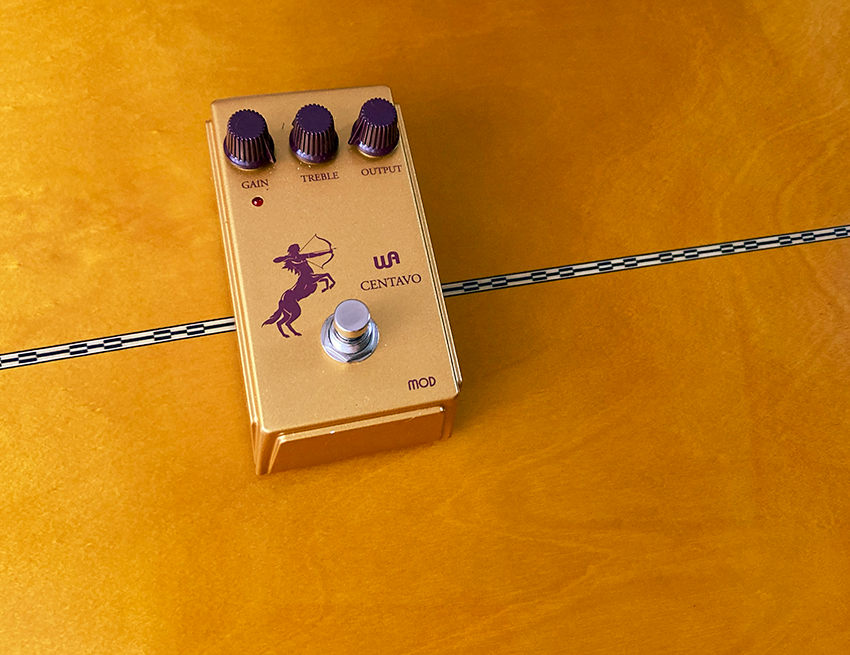
On the front are Gain, Treble, and Output, just like the original. The circuit blends a clean signal in with the clipped one, so the pick attack and body of your guitar stay underneath the drive even as the gain comes up. When run into the JTM45 at the edge of breakup, the most useful setting is also the simplest. Keep the gain low, turn the output up, and let the amp do the distorting. The result still sounds like the amp, only louder and a little more compressed, which is why so many players leave this kind of pedal on all night. Into a clean amp it works as a light, open overdrive, and in front of a dirty channel it tightens things up and adds sustain for leads.
The MOD switch is the one feature the full-size Centavo doesn’t have. Flip it up and the low end on the bottom strings fills out, giving riffs a throatier sound. The stock voicing is a little lean in the lows, which is part of why it cuts through a band mix so well. The switch lets you pick. A Telecaster or a small practice amp tends to benefit from the MOD setting, while a Les Paul through a big amp might not need the extra weight.
WA-C1 Mod: The Chorus That Starts With a Preamp
The WA-C1 Mod takes the circuit from Warm Audio’s full-size WA-C1, a recreation of the Boss CE-1 Chorus Ensemble, the all-analog chorus and vibrato that a lot of later chorus pedals were modeled on. The modulation runs on a modern version of the MN3007 bucket brigade chip, clocked to match the speed and depth of the vintage unit. A classic tone that still feels ahead of its time today.
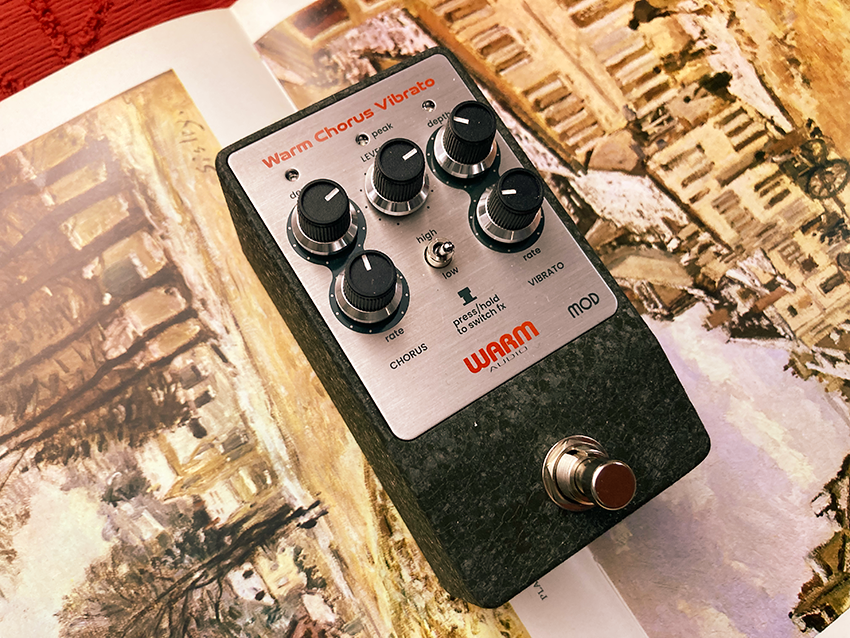
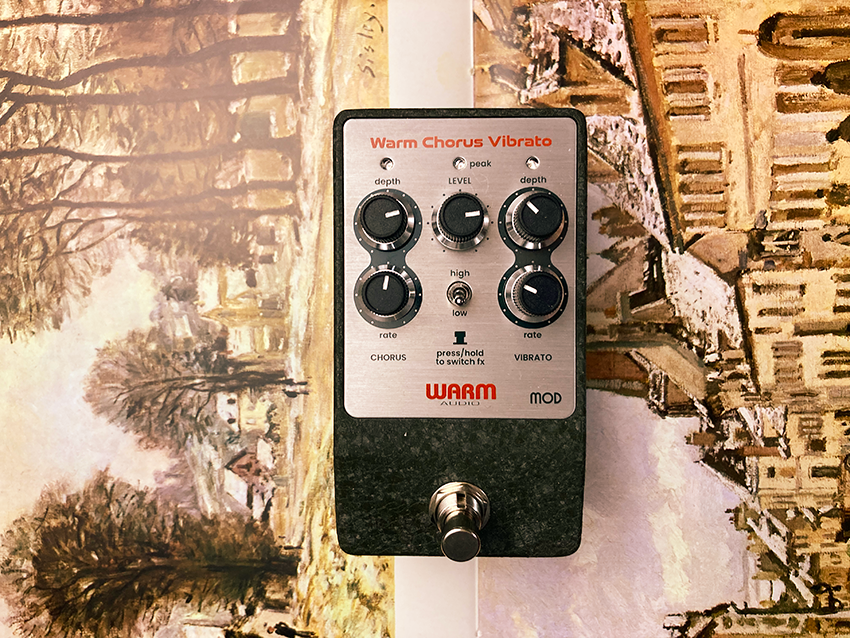
Before any modulation happens, your signal goes through an analog preamp matched to the original’s, with a Level control that adds bite and a touch of natural compression. Some players kept the old units on their boards for that preamp alone. The Mod keeps it and adds a Vintage/Modern switch that takes it out of the path. That comes in handy when the WA-C1 Mod sits after a drive pedal and the extra gain starts stacking up. In front of the JTM45, Vintage mode pushes the amp a little harder into breakup, while Modern leaves the amp’s gain where you set it.
The chorus side has separate Depth and Rate knobs. The original’s single Intensity control only sped the effect up while depth stayed fixed, so slow, shallow settings for thickening clean arpeggios were out of reach. Here they’re easy. Switch to vibrato and you get pure pitch wobble with a rotary-speaker feel that suits funk and blues. A flashing LED shows which mode is on and how fast it’s moving, and the stereo outputs split wet and dry if you run two amps.
The Hi-Z switch on the back is easy to overlook, but it changes how your guitar sounds even with the pedal off. The vintage 50k input impedance loads down passive pickups and shaves off some top end. The 1.1M setting keeps a Les Paul or Tele sounding like itself, and the 50k setting is there when you want the darker vintage response.
Putting Them on One Board
None of these pedals tries to reinvent its sound. Each one holds on to the circuit that made the original worth copying, and the changes Warm Audio made mostly show up once you start playing. The octave switch on the Peach Fuzz and the MOD switch on the Centavo Mod are small additions that change how you use each pedal, and the WA-C1 Mod’s split controls let the chorus go subtle in a way the original couldn’t.
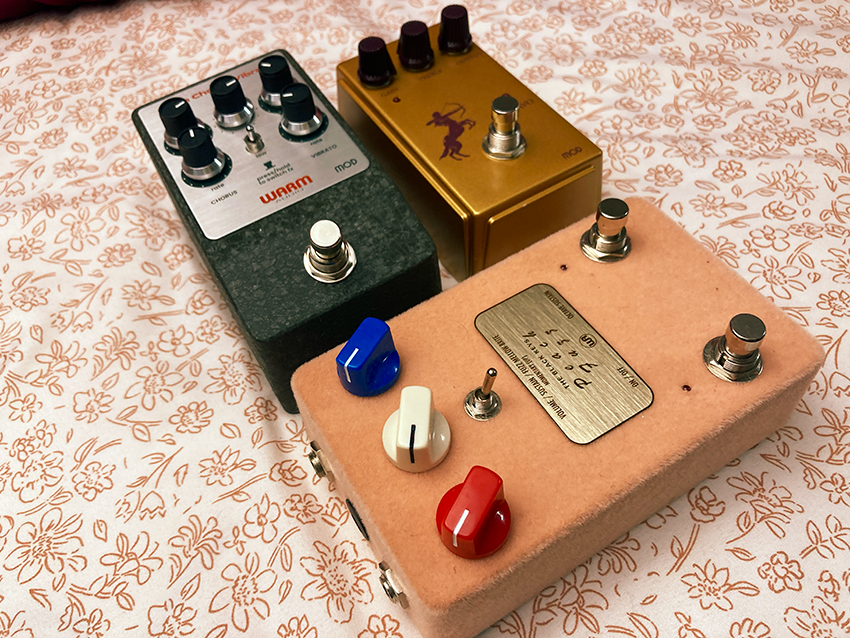
They also get along well on one board. Most vintage-style fuzzes like to see the guitar first, so the Peach Fuzz goes at the front of the chain. The Centavo Mod can follow it as a boost for solos, and the WA-C1 Mod sits after both, set to Modern if its preamp starts adding more gain than you want.
The demo clips in this article are a good first listen, but pedals like these respond to your own amp and your own hands, and that’s where you’ll find out which one belongs on your board. Either way, you’re getting sounds players have chased for decades, in boxes that fit the board you already have, without hunting down a vintage original.



Leave a Reply