
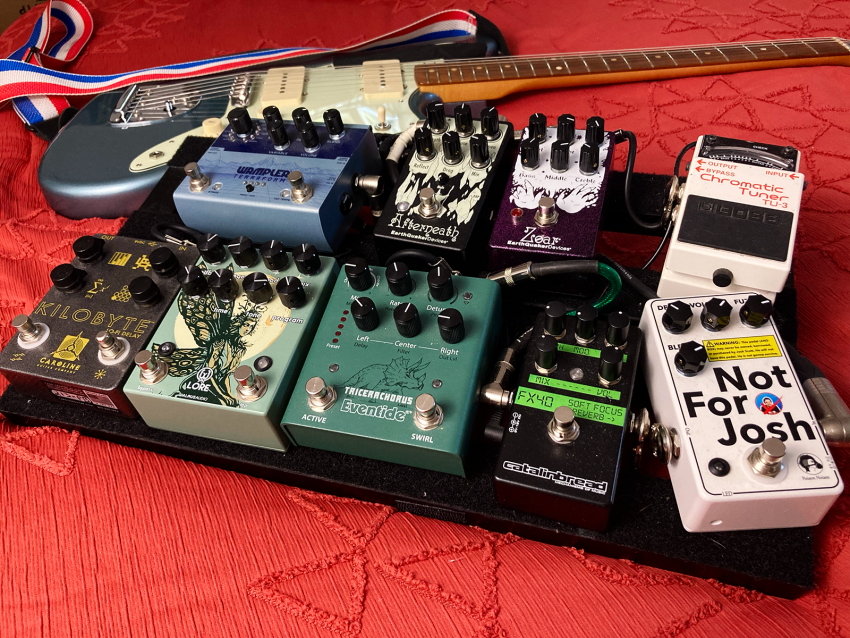
You’ve got your guitar set up and your amp dialed in, but your favorite artists are standing in front of dozens of stompboxes on stage. Pedals are a world of their own and some of the most fun you’ll have while exploring gear and building your unique rig. But when you’re staring down a massive shelf (or product search on zZounds) of pedals of all shapes and sizes, it’s easy to get lost in what’s needed and what’s fluff (or just fun).
When you’re starting a rig or pedalboard from scratch, the opportunity for exploration and the time it takes to learn can feel immense. There’s always new gear releasing, there are the classics that hold up over time, and the hidden gems you couldn’t imagine your rig without. To help you out, here are a number of pedals under $150 that build a solid foundation, any one of which makes a great first pedal.

Tuner: The Unsexy Must-Have
If you’re gigging out, or even just recording in your bedroom, a set-up, in-tune instrument is a must-have. And really, up until recently the tuner pedal was considered a utility more than an aesthetic choice. But Walrus Audio has changed that with their Canvas tuner pedal. Walrus rightfully regards the tuner pedal as the most important piece on your board. It nails note accuracy (giving you the ability to set up and intonate your instrument), and it’s the rare tuner with total aesthetic customization, offering multiple color options and even a “custom photo” screensaver for when it’s not engaged.
As “utilitarian” as the tuner typically is, the Walrus Audio Canvas treats the tuner like a unique part of your rig, and not just a necessity that lacks personality.
Overdrive: Your First Taste of Breakup
Classic tube overdrive is the lifeblood of rock music, and has permeated many more genres over the last 75 years. But tube amplifiers aren’t always an option, and diming them out to get overdrive is typically even less practical. So you have to set your sights on a reliable replacement: the overdrive pedal.
There are endless options in this corner of the effects world, but a classic 808-style circuit is what a majority of players flock to. The Ibanez TS808 was introduced in 1979 and was designed by the Japanese company Maxon. This circuit features a distinctive midrange boost with smooth clipping that can not only replicate the breakup of a tube amplifier but, when used with a tube amp, push it even further into harmonic tube distortion.
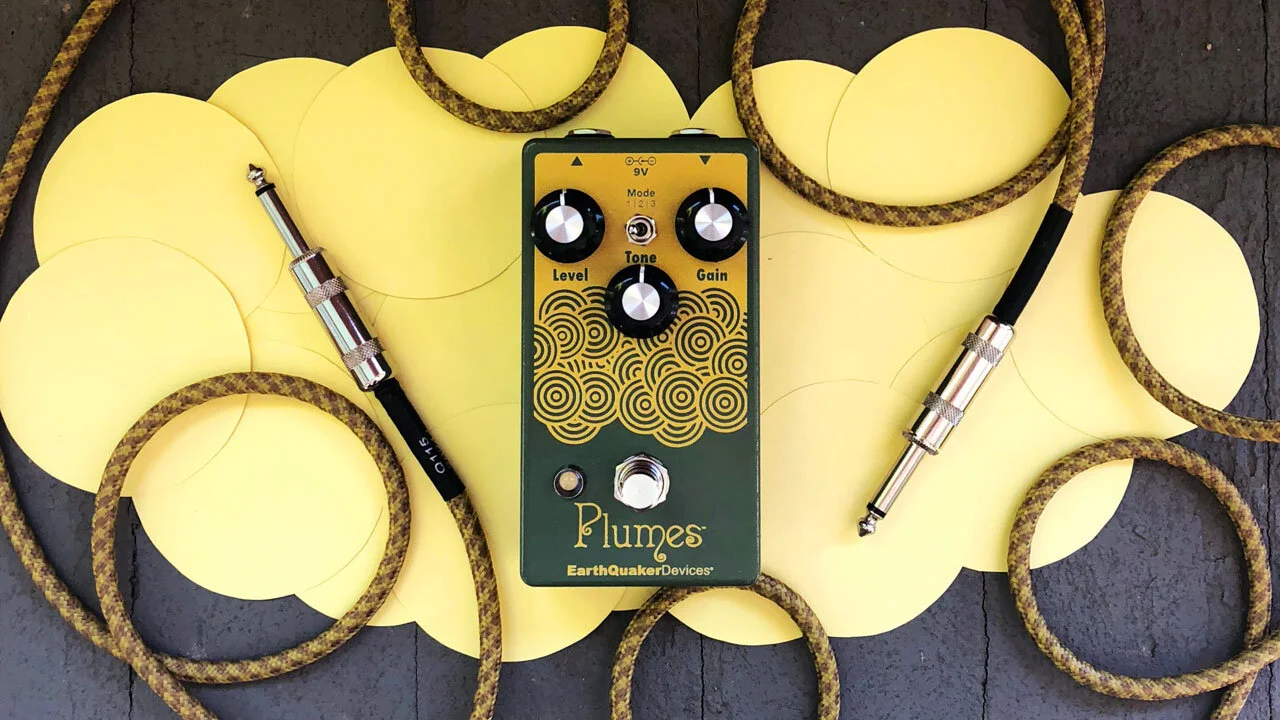
There are hundreds of 808-style overdrive pedals out there, but one that has built on the Ibanez and Maxon legacy while putting its own unique spin on it is EarthQuaker Devices with the Plumes overdrive pedal. The Plumes offers three clipping styles (how the pedal distorts your signal), delivering everything from smooth, transparent drive to aggressive, compressed crunch. The Plumes is truly an overdrive Swiss Army knife (or maybe an Akron Army knife?).
Fuzz: The Most Fun You’ll Have With Bypass “Off”
Fuzz is the king of fun guitar sounds and those soaring leads you hear on classic records. Plugging in a fuzz pedal seems to melt time away as you play your favorite riffs with added sustain and grit, come up with new leads, and craft brutal, punishing rhythms until you realize it’s been a few hours. The best fuzz pedals offer a distinct style that directly affects what your hands do on the fretboard, and what better fuzz pedal than the one that started it all: the Electro-Harmonix Big Muff.

Though the original Triangle Big Muff is hailed as the first in a lineage of countless fuzz pedals, Electro-Harmonix (and its owner Mike Matthews) is still expanding the Big Muff family to this day! The Big Muff Pi 2 is a 1970s design that never made it out the door; the schematic sat forgotten in storage for decades until Josh Scott of JHS Pedals dug it up during his research, and Electro-Harmonix finally put the circuit into production. The story is quite something, and the pedal is a tried-and-true Big Muff, with all the tasty sustain and grit you’ve come to expect from the great masters of fuzz, Electro-Harmonix.
Delay: Repeat After Me
Delay as a first pedal might seem strange, especially if you’re skipping those listed above (the typical first-effects crowd), but when you realize the potential of a delay as a tool to serve your song, you’ll never build a pedalboard without one. Delay is not only a repeating of notes, but a “tone thickener” and underrated modulation machine. Pushing a delay to its limits doesn’t just mean setting the repeats to multiple seconds; it means having it define your sound without overreaching, becoming a part of your identity as an artist. This may all seem esoteric, like delay is up on a pedestal, but delay in the hands of the right player can transform a song, let a guitar sit better in a mix, thicken a lead, and so much more.
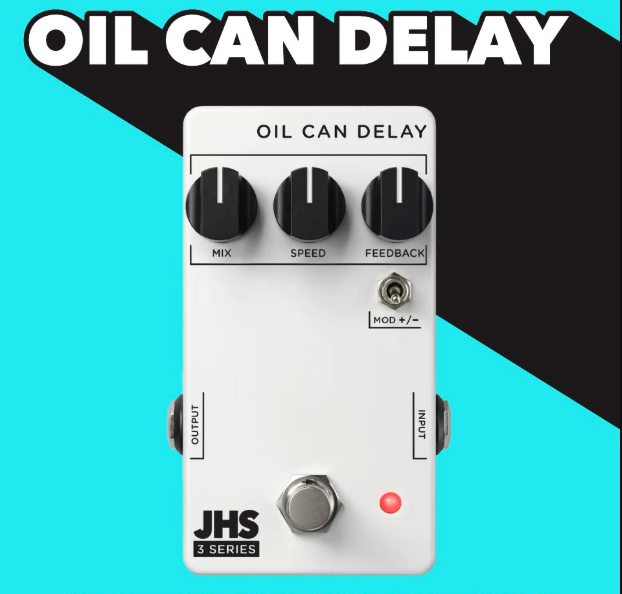
That’s why a classic is what you should reach for as your first delay pedal. The JHS 3 Series Oil Can delay is an accessible option for any player, built upon a 1959 delay circuit known as the “Oil Can” because the originals used a tuna-can-shaped drum moved by a belt mechanism, changing playback speed and creating a delay effect with whatever signal passed through. The reason this classic circuit style is so powerful is that there are elements of vibrato, slapback, and modulation all accessible under the hood of this simple, three-knob stompbox.
Chorus: Double the Fun
A deep, rich chorus can transform a verse, whether that’s shimmering sparkle or moody melancholy. Chorus sometimes gets written off as a novelty effect, but it’s responsible for plenty of signature, rig-defining tones: New Wave jangle, lush shoegaze textures, brooding metal verses, thickened leads. The effect itself is simple enough. A chorus pedal blends your dry signal with a subtly delayed, slightly pitch-shifted copy, and that blend is where the rich, swirling modulation comes from.

Once again, we’re leaning on a classic design reimagined for modern players. The Universal Audio UAFX Brigade chorus & vibrato is modeled on the 1976 “bucket brigade” analog chorus circuit, one you’ve heard on more records than you probably realize. The preamp emulation is part of the trick here, and the chorus and vibrato themselves cover a lot of ground: gentle movement and shimmer on one end, deep, seasick warble on the other. All of it with the character that made the original circuit so beloved.
Multi-Effect Modeling: One Box, Endless Sounds
Even if your budget is tight, diving headfirst into multi-effects isn’t as punishing on your wallet as it used to be. And these days, budget doesn’t mean toy. Plenty of affordable multi-effects units are genuinely gig-ready, with effects, signal-chain routing, and speaker cabinet emulation that would’ve cost serious money a decade ago.
Multi-effects pedals used to just cram a handful of effects into one enclosure and call it a day. Now, many include built-in impulse response (IR) support, letting you load digital captures of real speaker cabinets for more authentic, studio-quality tone. Pair that with the onboard effects and you can build a complete rig without hauling a mountain of gear.
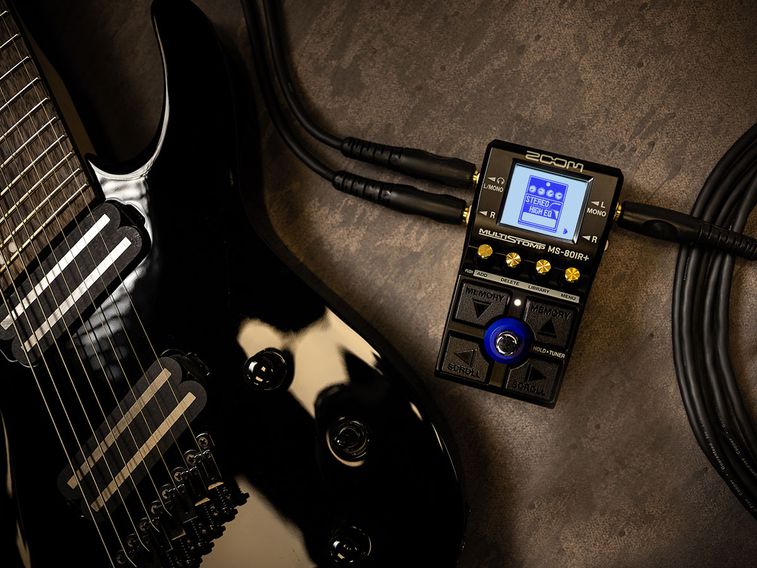
The Zoom MS-80IR+ MultiStomp is a perfect example. It comes loaded with high-quality cabinet IRs, supports third-party IRs from your favorite artists and engineers, and backs them up with a deep library of effects. Add up to 80 storable patches, and you’ve got a compact pedal that can recall your ideal sound at the tap of a footswitch!
Bass: Some Love for the Low-End
While we covered overdrive above, it’s only fair to give bassists their due. Although many guitar overdrive pedals work with bass, they’re often voiced to emphasize guitar-friendly midrange frequencies, which can leave your low end feeling thinner than it should. That’s where a dedicated bass overdrive shines, and few brands know bass tone better than Ampeg.
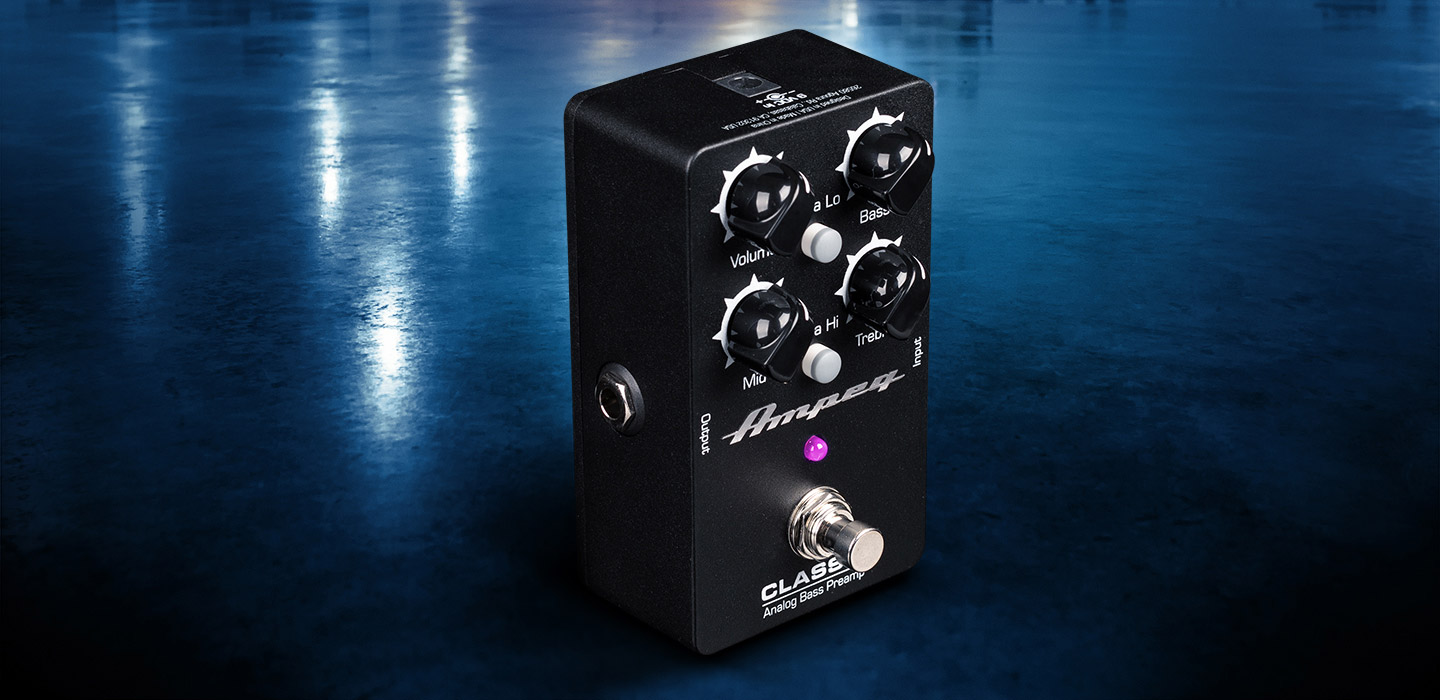
The Ampeg Scrambler bass overdrive delivers the warm, gritty character that has made Ampeg amps a staple of bass rigs for decades. Designed specifically for bass, it can sit at a subtle growl or push into full-on overdrive while preserving the low-end punch that holds a band together. And because it’s a fully analog design, the Scrambler responds with the rich, dynamic feel you’d expect from a cranked Ampeg rig.
If there’s a secret to building a pedalboard, it’s that there isn’t one. Every pedal on this list earns its spot in a different way: the tuner keeps you honest, the overdrive and fuzz shape your core sound, and the delay and chorus are where your rig starts to sound like you. There is no ideal way to start a rig, and there certainly isn’t a perfect first pedal, only the perfect first pedal for what you want to play. And at under $150 apiece, none of these will punish you for choosing “wrong.”
Boards are never really finished; the tuner might stay put for a decade while everything around it gets swapped, stacked, and rearranged. You’ll always remember your first pedal, but it’s not as important as falling in love with the music you’ll create with the gear surrounding you. Because gear comes and goes, but the music you make with it lasts forever.



Leave a Reply