
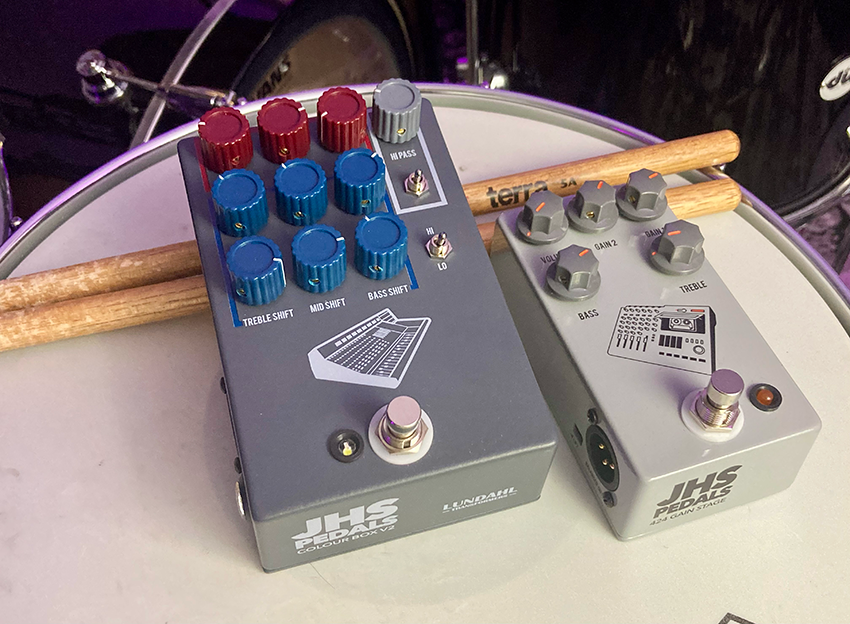
When we think of a vintage console, the word “color” comes to mind. The way each channel strip on a console processes the audio being pushed through it is affected by what’s available on that specific console, including the EQ, the transformers, etc.
These days, you don’t need a physical unit to get that warm, airy console feel on a record — there are plenty of plug-ins for that. But what if you want a more analog feel, something built on the back of the ones that got us here, like Neve, or for many of us, a Tascam Portastudio? JHS‘ ingenious and downright fun channel strip-inspired pedals bring that console warmth right to your pedalboard. But we’re not popping Velcro on the back of these and hitting a gig; we’re adding them into the signal chain, re-amping drum takes and using them the way they were originally intended to be used — as part of a channel strip.
Re-amping or Something Else?
If you think re-amping is only for guitars and basses, you haven’t been having my kind of fun. Sure, a re-amping box opens up a world of versatility for the studio engineer or the band they’re tracking. All of a sudden, if you’ve got a DI signal, you’ve got the world at your fingertips. Trying a different amplifier, a different chain of effects, or different microphones is as easy as selecting an output track in your DAW. But when I’m talking about using a re-amp box to “re-amp” drums, I’m more so talking about utilizing these pedals as outboard gear to color our raw tracks.
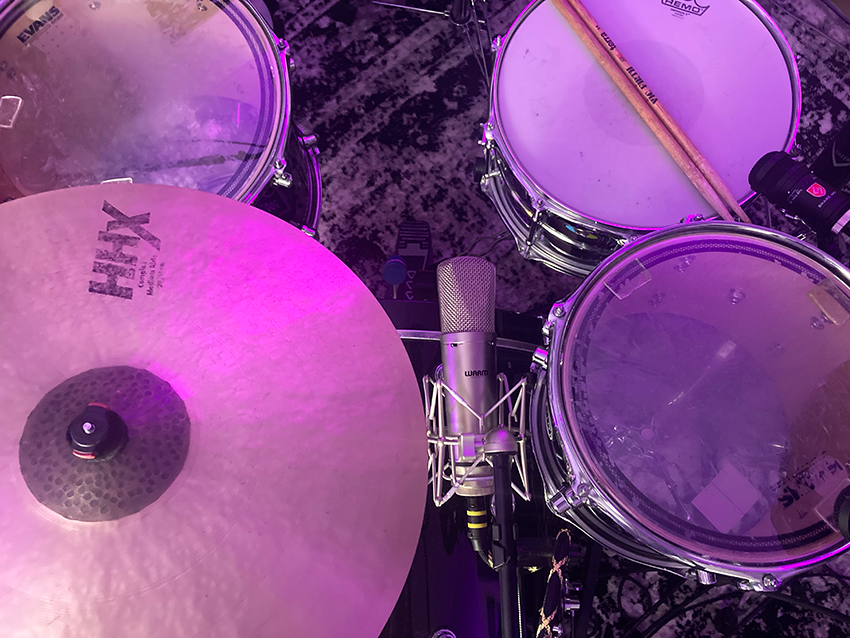
On a recent session, I patched raw drum stems out of a Focusrite Scarlett 18i20’s output into a Radial re-amp box with a TRS lead, out of the re-amp into pedals on a TS, and then back into the front of the 18i20 so I could capture the affected signal onto fresh tracks. For our pedal selection I’m using two different JHS channel strip-inspired pedals (not at the same time, but on the same tracks for a different “flavor”) the JHS 424 GainStage, and the JHS Colour Box V2 (the 10th Anniversary edition if you cared.) Both of these pedals might as well be a world apart in what they’re inspired by. The Colour Box is inspired by the Neve 1073, like the one found in Abbey Road studios that recorded bands like The Beatles, Pink Floyd, and Led Zeppelin, to name a few. The 424 GainStage is based on what my high school band Sound and Sense tracked an EP on, the Tascam 424 Portastudio.
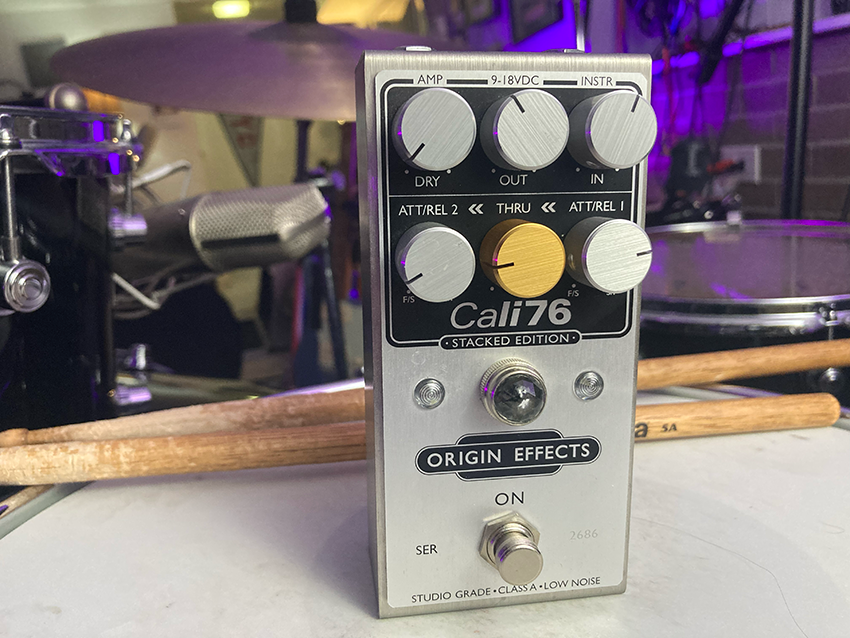
The raw tracks were sent through this signal chain, which included the Origin Effects Cali76 Stack Edition compressor; this was less to “color” the sound as an 1176 can, and more so to reign in the track with sculpting and to glue the kit sound together. This allowed me to really push the 424 and Colour Box’s preamps to near-breakup (especially useful on the 424.)
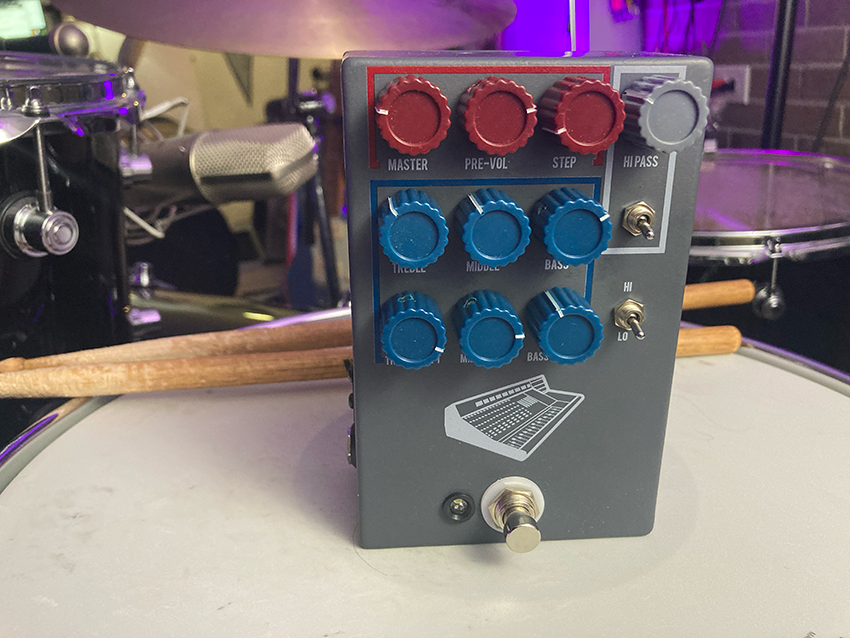
Using My Channel Strip…Pedals
Once the tracks are recorded, a pristine signal mic option in this case, I can re-amp them the same way you would with a DI guitar signal. I used my Radial Studio re-amping box to convert the line signal into instrument, go into the pedals and then back into an input of my Scarlett 18i20. As mentioned before, we’re just flirting with breakup on some of these colored takes. That means the Cali76 comes in clutch to tame these signals so you don’t have to completely rely on turning the gain down or fixing a messy, digital distortion in post, or worst of all, continuously re-recording the re-amped tracks.
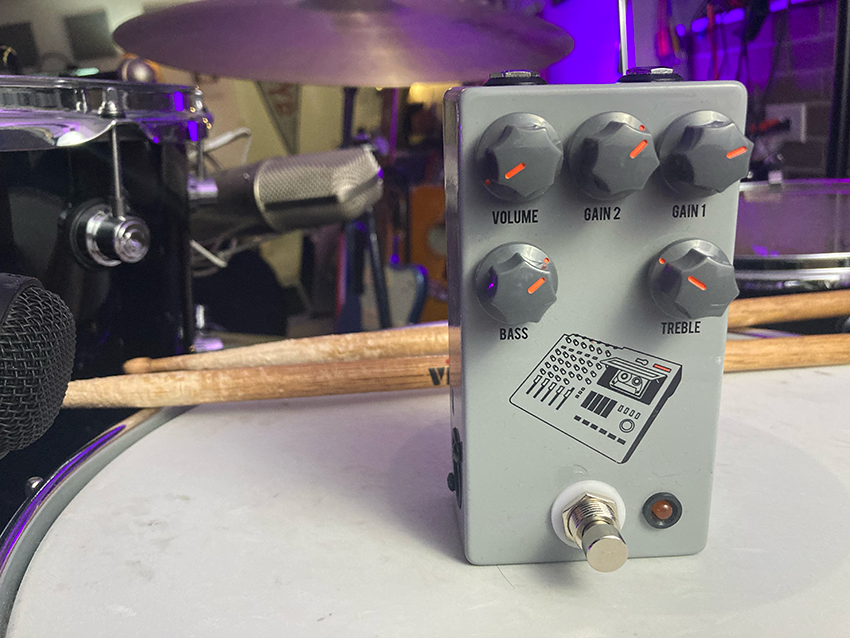
Related: The JHS 424 Gain Stage Brings the Portastudio to Your Pedalboard
JHS distilled the TASCAM 424 Portastudio’s characteristic grit into a preamp pedal. Hear it and learn more in this post! | Read »

This is where some un-sexy practical tips and processes come into play, like with the phase relationships of your tracks. This is extra important in the context of a mix; less so if you’re tracking a demo for TikTok or something. In my case, I had a full drum mix to contend with sonically. That means with the slight latency from re-amping, my phase relationships I worked so hard to amend in the room may be different now.
Thankfully, it’s incredibly easy to mend this by flipping polarity or even just sliding the re-amped tracks a bit down the line (I’m talking nano seconds, just so little you can’t tell) so you’re not having a sonic supernova of clashing audio on your hands.
You’ll know your track is meshing well if it’s not nasally and thin. It should be vibrant, with a harmonic push that isn’t fighting the original transient. Think of this as a textural layer in your drum mix. It should enhance the overall sound without stealing the attack of something like the snare or kick.
The Sound That’s Most Important
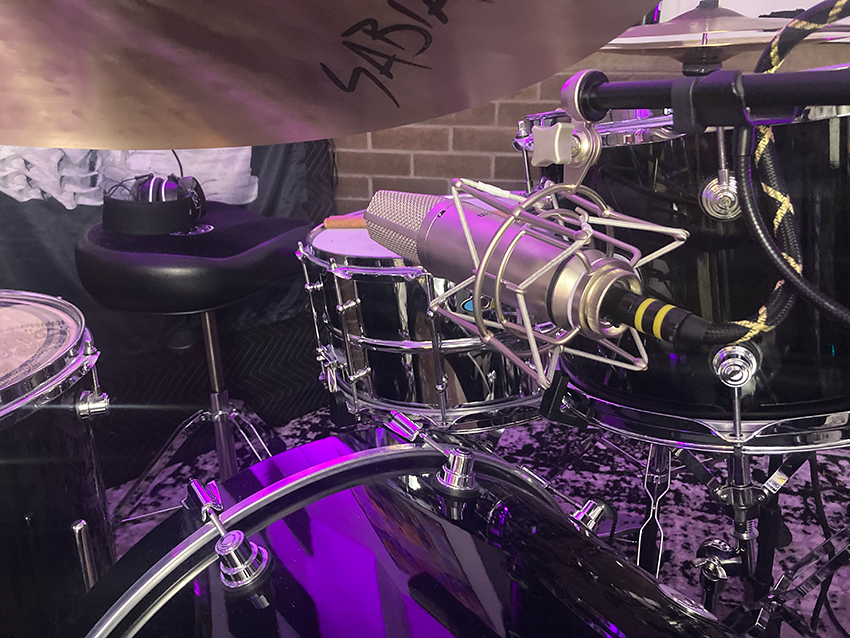
The Colour Box grants this single drum track a transformer-heavy sheen with some thickening in the mids that really pushes the snare. Even with some restraint on the affected levels, we’re getting a sound that’s infinitely more “airy” and sounds like it passed through a ’70s-era 1073, all for a fraction of the cost. On the other hand, the 424 is totally in-your-face, full preamp attitude when pushed. The saturation of these tracks is incredible, and totally has a place in any rock-adjacent mix.
It’s bolstering the tom grooves, pushing the kick drum to breakup and just giving us a truly unique and dirty drum sound that works in nearly every context I could throw at it. I can imagine the 424 being a “chorus secret weapon” where the affected track gets pushed up a few Db in the mix once the chorus comes in, or maybe a heavy bridge. Meanwhile, the Colour Box plays the role of an “always on” application that just gives my mixes more weight and class.
Though these two pedals (and the compressor) are often seen as utility effects, in this context of re-amping or using them as outboard gear you get into their true musical qualities. Listening to these pedals color the sound of a raw drum track inspires entire sections of a song to be bigger, more tonally diverse, and warm. There’s something magical that happens when you take a few minutes to setup a re-amping rig and hear your recorded signal through real analog gear like these JHS pedals, especially when you use them as channel strips.



Leave a Reply